Next week I get to watch one of my favorite things: see a room full of smart people handed a hard problem and watch them figure it out in real time. I’m headed to InfoComm to mentor, judge, and sit on a panel for an idea sprint about AI at the edge. And I could not be more excited.
Here’s the thing that’s got me fired up, and it’s the same thing I keep coming back to on this blog: if software changes something in the real world, it’s a robot. I wrote about that a while back. Your GitOps controller is a robot. Your trading algorithm is a robot. The AI agent writing code on your behalf is a robot.
Well. Guess what a meeting room is about to become?
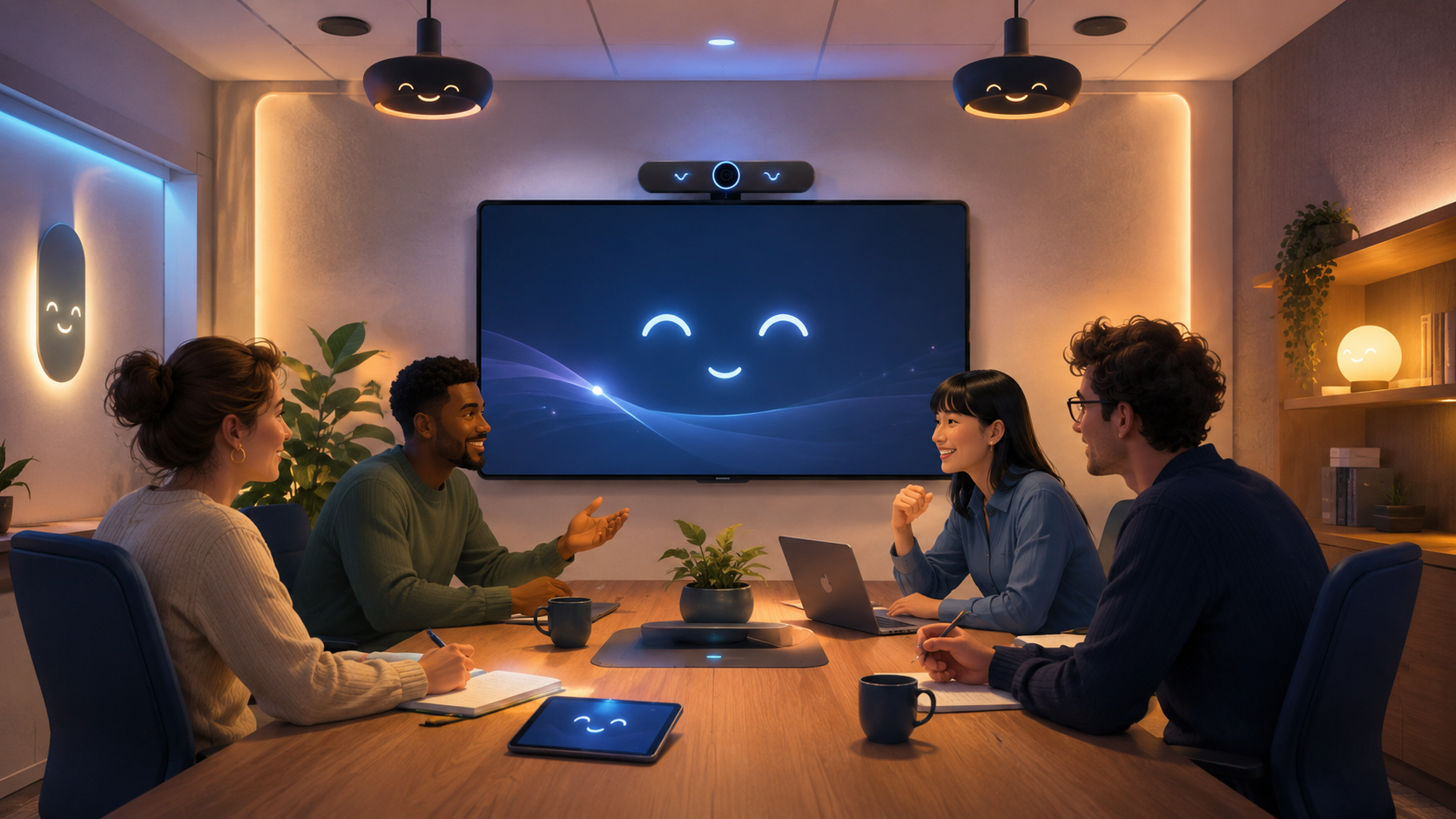
A robot you'd actually invite to the meeting.
What “The Edge” Actually Means Here
When most folks hear “edge AI” they think of a model running on a tiny chip. Sure. That’s part of it. I’ve spent a good chunk of my career on edge devices and I love the resource-constrained, get-your-hands-dirty reality of it. My whale song project lives out there.
But the edge isn’t just where the silicon is. The edge is where the context lives. It’s where the people are, where the conversation is happening, where the decision actually gets made. Sometimes that’s a chip in a device. Sometimes it’s intelligence in the room. Sometimes it stretches out to the building or the local network.
The point isn’t the technical boundary. The point is this: intelligence is moving closer to the moment of action. Closer to the people. Closer to the real world.
And when intelligence gets close enough to the real world that it can act on it - adapt it, change it, respond to it - well, now we’re back to robots, aren’t we?
We All Live in These Rooms
Here’s what makes this one land for me. This isn’t some niche embedded problem that a thousand engineers care about. This is everybody’s daily life.
Think about how much of your day happens in front of a screen, on a call, in a room with a camera and a mic and a display. Audio-video is the connective tissue of modern work. We standardized it, we simplified it, we made it manageable - and in doing so we kind of froze it in place. The room works. The call connects. The screen shares. Well, when the meeting room gear works right at least.
But does the experience work? Does the room actually help the meeting succeed?
For decades the answer was: the room is a dumb box and the humans do all the adapting. You walk in, you fight the control panel, you find the right dongle, you start the call. The human is the actuator.
That model is dying. Same as the mouse-and-keyboard era is dying everywhere else (you are talking to your AI agent, right?).
What happens when the room perceives, reasons, and acts? When it understands who’s there and why, and quietly does the right thing? Perception. Reasoning. Action. Consequence. That’s the exact loop I keep describing.
The room becomes a robot. One without a metal body. One you’ll actually want in the building.
You Can’t Learn to Swim From a Book
Now here’s why I love that it’s a sprint and not a panel of pundits predicting the future from a stage. (Yes, I’m also on a panel. The irony is not lost on me.)
You cannot learn to swim from a book.
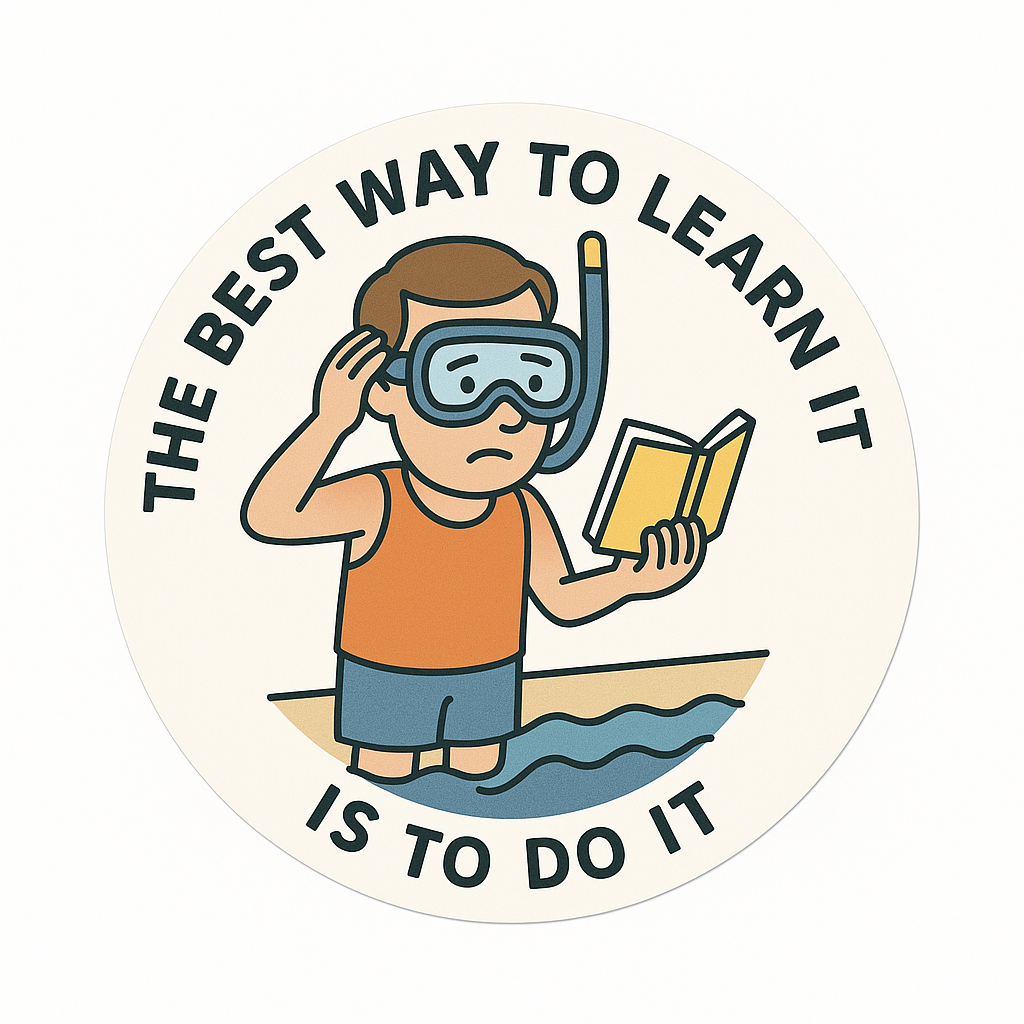
Yeah. This.
I mean it. You can read every book ever written about freestyle technique, drag coefficients, and the physiology of the kick. You can highlight passages. You can take notes. And then you jump in the deep end and you sink like a stone, sputtering, because knowing about swimming and swimming are two completely different things.
I learned this the hard way in the Navy. Rickover’s program didn’t hand you a binder and wish you luck. They threw you at real reactors, real watch stations, real consequences. You learned by doing, under pressure, with people who’d done it before standing right next to you. That’s the whole game. That’s where competence comes from.
The same is true for AI right now. The naysayers who haven’t seriously used these tools are pontificating from the shallow end of the pool. The people getting somewhere are the ones in the water, getting a face full of it, figuring out what actually works.
That’s what a sprint is. You don’t theorize about whether AI can change collaboration from the safety of the deck chair. You get in and wrestle with it.
Now let me be honest about what this particular sprint is and isn’t. Nobody’s shipping production code in an afternoon, and that’s fine - because here’s the funny thing, it matters less than it used to. With today’s agentic AI tools, building the thing has never been easier. I can stand up a working slice of an idea faster than I can write a decent spec for it. The bottleneck isn’t the code anymore. It’s deciding exactly what to build.
So the value moves upstream. Way upstream. Past the coding, past the prototype, all the way back to the hardest question there is: can you clearly articulate a real solution to a real problem - and say why anyone should care?
That’s the swimming. Not the typing. The imagining. The honest, unglamorous work of nailing the problem, the solution, and the value so cleanly that someone else gets it in thirty seconds. The water is the idea, not the implementation.
Get Clarity First
This is where a few decades of doing this start to pay off, and where I’ll be pushing teams the hardest.
If you can’t explain it simply, you don’t understand it yet. Geesh, I’ve watched brilliant engineering die because nobody could say, in plain language, what problem it solved and for whom. The tech worked. The pitch didn’t exist. Dead on arrival.
So before you fall in love with your solution, get ruthless about clarity. A couple of tools I lean on:
The Amazon PR-FAQ. Amazon famously makes teams write the press release before they build the product - the announcement a customer would actually read on launch day, plus the hard FAQ behind it. You work backwards from the customer. It’s a brutal forcing function. If the press release is boring, or you can’t answer “why does this matter,” the idea isn’t ready - and you just saved yourself months of building the wrong thing. One page. Customer-obsessed. No jargon.
The elevator pitch. Can you land the whole thing - problem, who hurts, your move, why now - before the doors open? If it takes you five minutes and a diagram, you haven’t found the core yet. The discipline of compression is the thinking. It’s not marketing fluff; it’s how you find out whether there’s a there there.
And if you want to go deeper, go read Steve Blank. His foundational book The Four Steps to the Epiphany basically launched the whole lean startup movement. The core idea is one every sprint team should tattoo on their arm: ideas are cheap, and no plan survives first contact with a real customer. Get out of the building. Go find out if the problem you imagined is a problem anyone actually has. That’s customer development, and it beats a clever solution looking for a problem every single time.
The AI can build almost anything now. It cannot tell you what’s worth building. That part is still on us.
What I’m Looking For as a Judge at the NEXXT Event
I won’t spoil the specific challenges - that’s for the teams to wrestle with. But I’ll tell you the gut check I’ll be running the whole time, because it’s the same one I run on every piece of technology that crosses my desk:
Does the “after” feel like a different game, or just a faster version of the same one?
Anybody can bolt a chatbot onto an existing workflow and call it AI. Baloney. That’s incremental. What I want to see is a team that questioned an old compromise we’ve all quietly accepted for years - one of those “well, that’s just how rooms work” assumptions - and showed me it doesn’t have to be true anymore.
And then - this is the part that matters - showed me a credible next move. Not a fantasy. Not a ten-year moonshot. Something you could actually start proving in 90 days if somebody handed you a room and a weekend and a Claude Code account. Bold enough to reframe the problem. Disciplined enough to keep it real.
Transformational and buildable. That’s the sweet spot. That’s the hard part. That’s exactly why it’s worth doing.
Want In?
This whole thing is the NEXXT Sprint, and it’s worth saying plainly: it’s the kind of event our industry needs more of. Not another keynote where someone tells you the future from a stage. A room full of practitioners actually doing the imagining, together, under the clock.
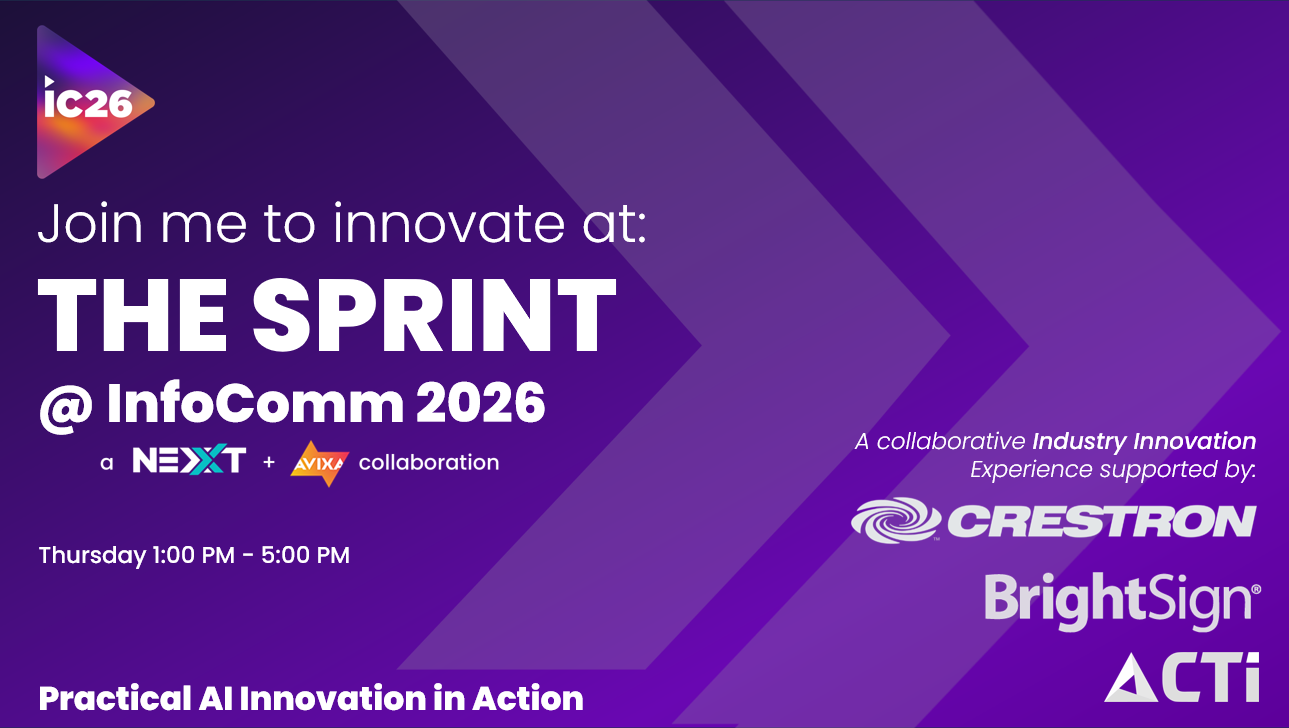
Come build the next move with us.
If you want to be in the room - as a participant, not a spectator - reach out to Byron Tarry at byrontarry@nexxtnow.com and tell him you want in. Seriously. If you’ve got the itch to stop reading about it and get in the water, this is your pool.
Why This Matters
Look. We’ve been building robots without metal bodies for years now and mostly not calling them that. The infrastructure robots. The trading robots. The coding robots. Now the physical world and the digital world are collapsing into each other, and the humble meeting room - a thing literally everyone uses - is next in line to wake up.
That’s not a small thing. That’s the next huge thing. AI getting close enough to the real world, to the room, to the people, that it stops responding and starts contributing.
I get to spend some time next week with a roomful of people trying to build exactly that, in real time, hands wet, under the clock. Mentoring. Judging. Arguing on a panel. Watching teams get in the water and figure out how to swim.
Damn, I’m lucky.
If you’re going to be at InfoComm, come find me. I’ll be in the BrightSign booth.
BrightSign Booth Events
I’ll also be giving a short talk - Intelligence at the Edge - right in the BrightSign booth, several times across the show. Come heckle me. Here’s when:
- Wednesday, June 17 - 11:00 AM
- Thursday, June 18 - 10:00 AM and 3:00 PM
- Friday, June 19 - 2:00 PM
Each one’s a tight 20 minutes. The short version: why the next era of AI happens at the endpoint and not the cloud - because latency, bandwidth, privacy, and offline reality all break down when intelligence lives a 200-500ms round-trip away - and how a platform already deployed across millions of endpoints turns a humble media player into an intelligent edge AI device.
And if you’ve got opinions about edge AI, robots-that-aren’t-robots, or whether the room should be that smart - drop me a note on LinkedIn. I’d genuinely love to hear it.
Now quit reading about swimming and go get in the pool.
Long live the robots!