After two years of false starts with the Bristlemouth platform and permit headaches, I’m revisiting my whale song project with a completely different approach: semi-autonomous floating drones. The regulatory landscape has forced a rethink, and honestly, it might lead to something better.
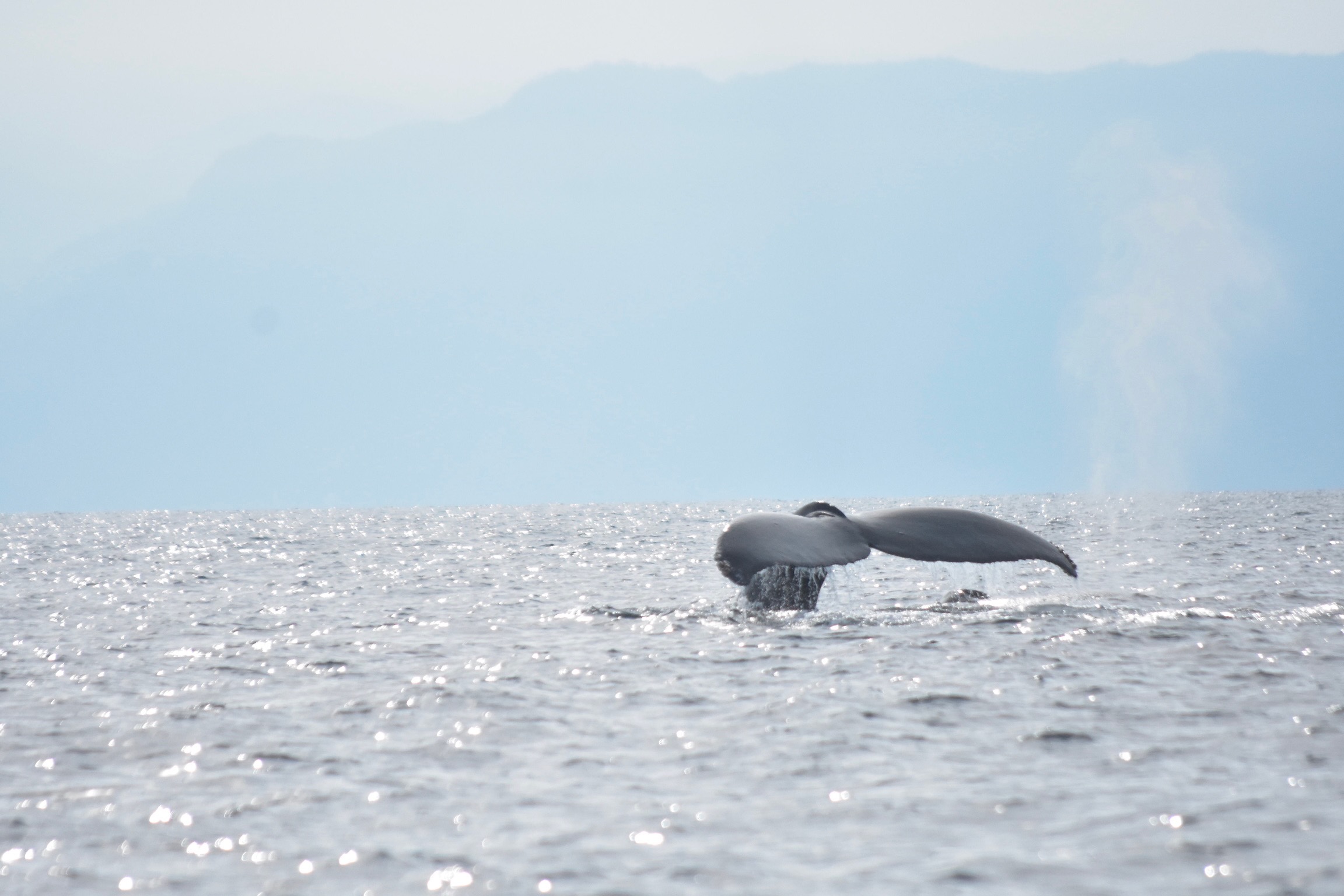 Humpback whale in the Bay of Banderas, near Puerto Vallarta Mexico. December 2023. Photo by Greg Herlein
The Permit Problem
Here’s the reality I’ve learned the hard way: getting permits for autonomous, unattended marine devices is essentially impossible for an individual or small team. The regulatory framework wasn’t designed for hobbyists or independent researchers deploying sensor buoys. You need institutional backing, insurance that costs more than the equipment, environmental impact assessments, and approvals from multiple agencies in multiple countries. The Bay of Banderas spans Mexican federal waters, and the whales don’t care about jurisdictional boundaries.
For a part-time hobby project, it was just too much.
But here’s what I realized: we fly drones in the air all the time. The key difference? We retain control. The drone isn’t autonomous and unattended - it’s remotely operated by a human who can see it, control it, and retrieve it. The same regulatory principle applies to water.
The Drone Approach
A semi-autonomous floating drone with a hydrophone changes everything:
- You launch it, you control it, you retrieve it - no permits for “unattended marine devices”
- Real-time data link - audio streaming back to the boat or shore station
- Repositioning on demand - follow the whales instead of hoping they swim by your fixed buoy
- No overnight deployment concerns - you bring it back when you’re done
- Multiple units working together - triangulate whale positions in real-time
The “semi-autonomous” part means it can hold station, avoid obstacles, and manage its own power - but a human is always in the loop for navigation decisions. Just like a DJI drone hovering while you frame a shot.
This isn’t a new idea in the air. It’s time to bring it to the water.
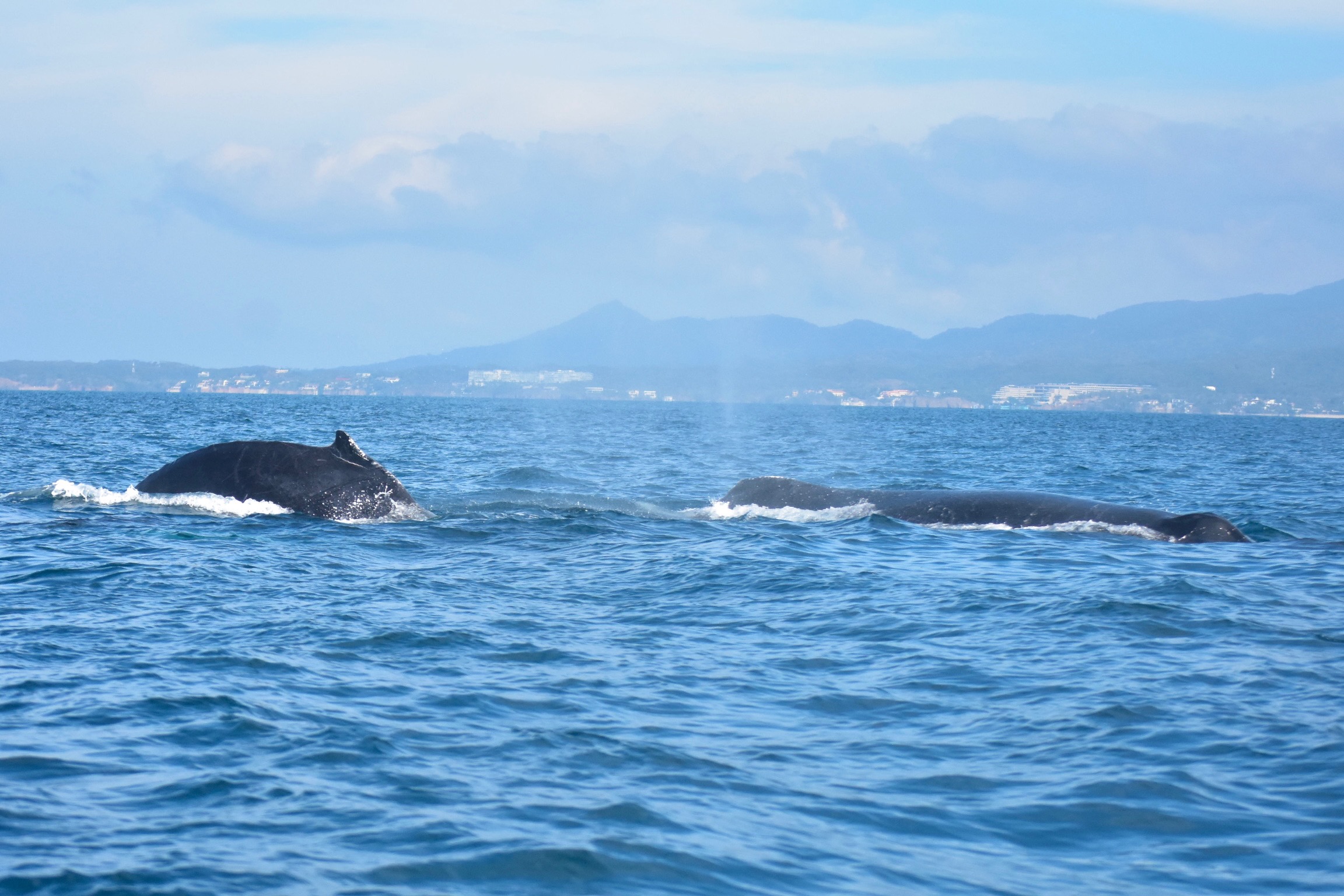 Humpback whales in the Bay of Banderas, near Puerto Vallarta Mexico. December 2023. Photo by Greg Herlein
What We Need to Build
The core requirements for a whale-song-recording water drone:
Hull and Propulsion
- Stable platform that can handle Pacific swells
- Electric thrusters for quiet operation (whales have excellent hearing)
- Solar charging for extended operations
- Enough buoyancy to carry the payload
Sensors
- High-quality hydrophone - the whole point of this exercise
- GPS for positioning
- IMU for orientation and motion sensing
- Camera for situational awareness
- Environmental sensors (water temp, salinity) because why not
Communications
- Long-range radio link to the operator (LoRa, or ham radio bands now that I’m K06HAX)
- Real-time audio streaming - compressed but high enough quality for whale song
- Telemetry for position, battery, system health
Compute
- Edge processing for audio - we don’t need to stream everything, just the interesting parts
- AI/ML for whale call detection - alert the operator when there’s activity
- Autonomous station-keeping and obstacle avoidance
A Father-Son Project
Here’s where this gets personal.
My son Luca graduated from university with a degree in Aerospace Engineering and has been building his own skills in robotics and embedded systems. We’ve built various robotics projects for years and have been looking for a project we can do together - something real, something that matters, something that combines his mechanical intuition with my software background.
This is that project.
We’re not just building a whale-song recorder. We’re building a prosumer-grade waterborne robot platform - extensible, well-documented, and programmed in Go as much as practically possible.
Why Go? I’ve written about this before. Single-binary deployment. Excellent cross-compilation for ARM targets. Goroutines for the concurrent sensor processing we’ll need. No Python dependency hell on a embedded Linux system. The robotics world is sleeping on Go, and we’re going to prove it works.
The goal isn’t just to record whale songs (though we absolutely will). The goal is to create a platform that others can build on. Open source the designs. Open source the software. Document everything. Make it possible for the next person - whether that’s a marine biologist, a conservation group, or another father-son team - to build their own and get to the interesting science faster.
Think of it as the “Raspberry Pi” of waterborne research drones. Which may or may not be based on a Raspberry Pi.
What’s Next
We’re in the early design phase now. Luca is sketching hull concepts. I’m prototyping the communications stack. We’re both reading everything we can find about hydrophone design and whale acoustics.
Expect posts about:
- Hull design trade-offs (displacement vs planing, stability vs speed)
- Hydrophone selection and integration
- The Go-based control system architecture
- Long-range radio options for real-time audio
- Edge AI for whale call detection
- Lessons learned from testing in the pool (and then the ocean)
This is going to be a multi-year effort. The whales return to Banderas Bay every winter, so we have natural milestones. Maybe by winter 2026-2027 we’ll have something in the water that actually works.
Stay Tuned
I started this whale chase in 2023 with dreams of fixed buoys and the Bristlemouth platform. That path didn’t work out. But sometimes the detour leads somewhere better.
A remotely-operated drone fleet. Real-time whale song monitoring. A platform others can build on. A project with my son.
Stay tuned. The whales are waiting.